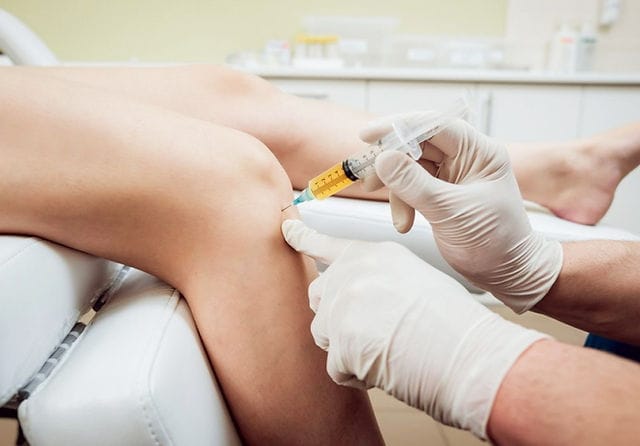
Exploring evidence-informed regenerative approaches in musculoskeletal care, with individualized assessment, realistic expectations and rehabilitation support.
Evaluation of selected musculoskeletal conditions for appropriate regenerative options
Treatment decisions are based on diagnosis, symptoms, goals and clinical suitability
Recovery plans may combine appropriate treatment with exercise and rehabilitation
Department-specific educational and procedure videos can be added here.

Regenerative medicine is an area of medical care and research focused on approaches intended to support tissue healing, repair or function.
In musculoskeletal practice, selected regenerative approaches may be considered for certain conditions after detailed clinical assessment. Not every patient or condition is suitable.
Assessment is individualized and investigations may be recommended when clinically appropriate.
Selected chronic tendon or soft-tissue problems may be evaluated for appropriate treatment options.
Certain joint conditions may be assessed as part of a broader non-operative or regenerative care plan.
Some patients may benefit from a combined approach involving symptom management, rehabilitation and carefully selected interventions.
Treatment options are considered in the context of current evidence and the individual clinical situation.
The overall aim is to improve symptoms and function rather than promise a guaranteed tissue-regeneration outcome.
Each patient receives an individualized plan based on diagnosis, suitability, expectations and goals.
Detailed history, examination and relevant investigations to understand the condition.
The specialist discusses whether a regenerative approach is appropriate and what evidence supports it.
The recommended option, alternatives, benefits, limitations and rehabilitation plan are discussed.
Progress is reviewed and the treatment plan is adjusted according to symptoms and functional recovery.
Recovery and ongoing management are individualized according to the condition and treatment plan.
Activity may be modified temporarily according to the condition and treatment plan.
Appropriate exercise and physiotherapy may support strength, mobility and function.
Follow-up helps assess symptoms, function and response to treatment.
No. Suitability depends on the diagnosis, clinical findings, patient factors and the evidence for the proposed approach.
No. Outcomes vary, and regenerative treatments should not be presented as guaranteed tissue regeneration or a cure.
Rehabilitation may remain an important part of care, depending on the condition and treatment plan.
The specialist considers the diagnosis, symptoms, goals, available evidence, alternatives and individual suitability.
For evaluation and discussion of treatment options, contact the Department of Orthopaedics at The Oxford Medical College, Hospital & Research Centre.
Contact Orthopaedics