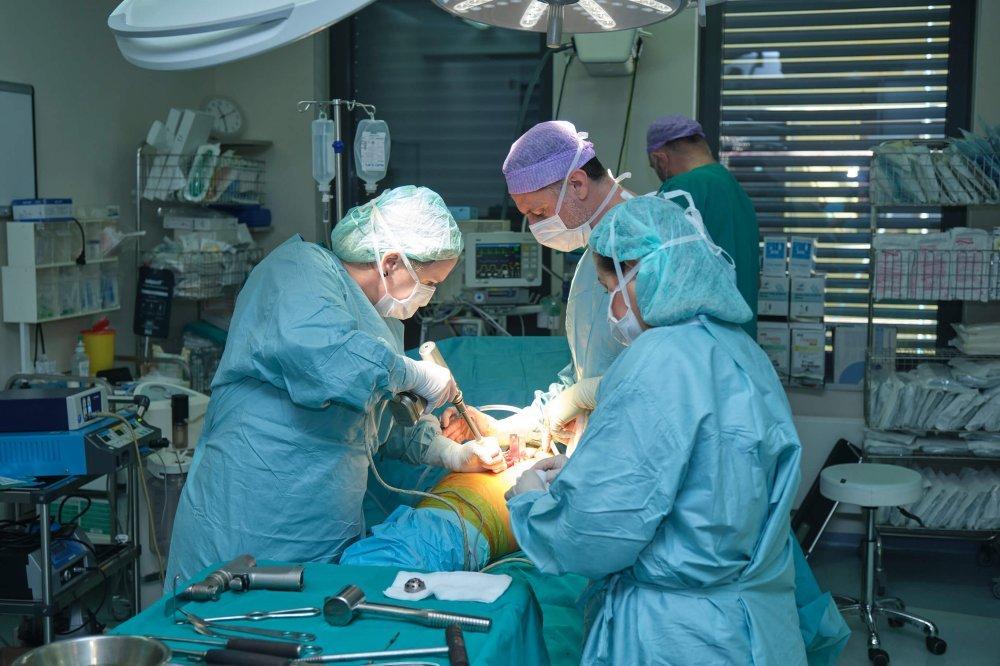
Comprehensive orthopaedic care for patients with painful or damaged injured areas, with a focus on relieving pain, improving mobility and supporting a better quality of life.
Comprehensive care for traumatic injuries and fractures
Appropriate surgical and non-surgical treatment for fractures
Support for recovery, strength and mobility
Watch selected orthopaedic procedure videos. Each video has its own player so one file cannot interfere with another.
If a video still does not play, make sure the corresponding .mp4 file is inside the Videos folder next to this HTML file.
Trauma & Fracture Care, also known as Total Hip Arthroplasty, is a surgical procedure in which damaged parts of the injured area are replaced with artificial components.
Treatment depends on the type and severity of injury and may include emergency stabilization, fracture reduction, fixation, wound care and rehabilitation.
Each patient is evaluated individually by the orthopaedic and trauma team to determine the most appropriate treatment plan.
The trauma team evaluates the injury, symptoms, examination findings and imaging before recommending treatment.
Fractures may involve the upper or lower limbs, pelvis and other bones and require treatment based on the injury.
Trauma may also cause ligament, tendon, muscle or joint injuries that require appropriate assessment and management.
Open, displaced or complex fractures may require urgent specialist assessment and, when appropriate, surgical fixation.
Treatment aims to control pain, stabilize the injury and support safe healing.
Appropriate treatment and rehabilitation aim to restore movement, strength and functional ability.
A structured treatment and rehabilitation plan can support a safe return to appropriate daily activities.
Rapid assessment of the injury, symptoms, medical history and overall condition.
X-rays and other investigations when clinically required, followed by treatment planning.
The fracture or injury is managed using appropriate non-surgical or surgical treatment.
Guided rehabilitation supports healing, strength and mobility.
Recovery varies depending on the injury, treatment, overall health and rehabilitation needs.
Movement and weight-bearing are progressed according to the injury and the treating team's advice.
Physiotherapy can help restore strength, balance, mobility and function.
Follow-up helps monitor healing, function and recovery progress.
Trauma & Fracture Care is a surgical procedure in which damaged parts of the injured area are replaced with artificial components.
Urgent medical evaluation is appropriate for significant injuries, suspected fractures, severe pain, deformity, open wounds or difficulty using the injured limb.
Recovery varies with the type of injury and treatment. The treating team will provide an individualized rehabilitation plan.
Appropriate rehabilitation and physiotherapy can be important parts of recovery after trauma and fracture treatment.
For evaluation of traumatic injuries, suspected fractures or discussion of treatment options, contact the Department of Orthopaedics at The Oxford Medical College, Hospital & Research Centre.
Contact Orthopaedics